

They need more support. That distinction matters because many law firm owners assume exhaustion is simply part of the profession. Long hours become normalized. Constant stress becomes expected. Operational chaos starts feeling unavoidable.
But in many cases, the issue is not workload alone. It is the absence of a support structure capable of carrying the operational weight of a growing practice.
Business consultant Greg Horos has worked with attorneys across multiple stages of growth, and one theme consistently appears: firms struggle most when the attorney remains responsible for both practicing law and personally stabilizing every operational process inside the business.
Eventually, that becomes unsustainable. Not because the attorney lacks a work ethic, but because no business scales efficiently when every decision, question, and workflow depends on one person.
When firms lack operational support, attorneys become trapped in a reactive loop. Every day becomes a sequence of interruptions:
Individually, none of these tasks seems catastrophic. Collectively, they consume enormous mental bandwidth. Greg Horos frequently emphasizes that an attorney’s most valuable asset is not simply time. It is energy.
That mental energy directly impacts:
When attorneys spend their days patching operational holes, they lose the bandwidth required for higher-level work. The result is a firm that generates activity without generating sustainable growth.
The right support structure changes the experience of growth itself. Without support, growth creates more pressure. With support, growth creates leverage.
That difference often comes down to systems and operational visibility. Strong support structures help firms:
This is especially important for attorneys because legal work already carries a significant cognitive demand.
Trial preparation, negotiation, litigation strategy, and client advocacy require focus. When attorneys simultaneously carry operational management responsibilities, performance suffers on both sides.
Support structures remove unnecessary administrative noise so attorneys can focus on the work that actually drives the business forward.
One of the most important operational shifts law firms experience is moving from personality-driven management to process-driven management.
In personality-driven firms:
In process-driven firms:
Greg Horos often describes this transition using the idea of “guardrails.” The purpose of operational systems is not to create rigidity. It is to create consistency.
When guardrails exist, employees understand:
That clarity dramatically reduces friction inside the business.
One of the clearest signs that a support structure is working is that attorneys stop functioning like firefighters. Instead of constantly reacting, they begin operating strategically.
That shift creates measurable changes:
Most importantly, attorneys regain the ability to focus on growth intentionally rather than desperately.
Greg Horos shared an example of a client who became significantly more successful after improving operational efficiency simply because he finally had time to attend networking events consistently. That may sound simple, but it illustrates an important principle: opportunity requires bandwidth.
When attorneys are consumed by operational maintenance, they lose the ability to pursue the relationships and strategic opportunities that drive long-term growth.
Another overlooked benefit of strong support structures is employee confidence. Many operational issues inside law firms are not caused by poor employees. They are caused by unclear expectations.
When staff members lack documentation, training, communication structures, authority boundaries, and process visibility they become hesitant and dependent. That dependence creates frustration for everyone.
Strong onboarding systems and SOPs eliminate much of that uncertainty. Team members understand what is expected, where resources exist, and how to complete tasks effectively.
As confidence increases, the firm becomes more efficient. Employees stop waiting for constant approval. Attorneys stop repeating instructions. Communication becomes proactive instead of reactive. The entire business gains momentum.
One of the strongest ideas throughout Greg Horos’ perspective is that law firms should not consume the very lives attorneys are trying to build.
Many attorneys begin their practices seeking freedom:
But without operational support, growth often produces the opposite outcome. The attorney becomes chained to the business.
Everything depends on them. Every problem reaches them. Every delay requires them.
Eventually, even success begins to feel exhausting. The right support structure interrupts that cycle.
It allows the attorney to focus on:
while operational systems continue functioning consistently in the background.
One of the reasons firms often struggle with delegation is that building systems while overwhelmed feels impossible.
That is where structured operational support becomes particularly valuable.
Organizations like DocketWorks help reduce the friction of implementation itself by assisting firms with:
That guidance matters because many attorneys do not need convincing that delegation is important. They need help creating systems that actually work. And support structures accelerate that transition.
Instead of learning entirely through trial and error, firms gain operational frameworks designed to reduce bottlenecks from the beginning.
At its core, operational support is about sustainability. The healthiest firms are not necessarily the firms working the longest hours. They are the firms capable of functioning consistently without constant emergency intervention from the attorney.
That is the real transformation.
The business becomes stable, the team becomes empowered, workflows become repeatable, and the attorney regains strategic control.
And ultimately, the firm becomes something many attorneys initially hoped to build from the beginning: a practice that supports their life instead of consuming it.
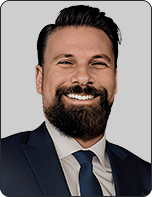
Greg Horos is a business development consultant with DocketWorks. With a background in sales, marketing, and creative services, he helps businesses unlock growth, streamline operations, and put genuine, long-term success within reach.